The Auckland Writers Festival is the Coachella for Book Lovers
BY JENNY JUNG
From international names to local voices, here is what to know before the festival begins.

13 MAR - 2026
This year’s programme is stacked with some of the most iconic writers in the world right now.
A few days ago, I got an early look at this year’s Auckland Writers Festival (AWF) programme, and suddenly May feels like it cannot come soon enough. If you have never heard of AWF, you are genuinely missing out. Think Coachella, but instead of music, you have more than 150 events led by over 200 writers, artists and thinkers, all happening between the 12-17th of May in Auckland. Perfectly timed for the colder months, it is the kind of event that lends itself to a cozy day out, whether you are going with friends, your partner or the whole family.
I won’t spend too much time on the children’s programme here, but if you are a parent reading this, it is absolutely worth exploring. There are plenty of sessions designed for younger audiences, from reading and writing events to performances and workshops that you will not want to miss.
One of my personal goals this year is simple: read more, write more and spend more time engaging with the kinds of stories and ideas that challenge the way I think. There feels like no better way to get into that mindset than by stepping into a festival that has become such a defining part of New Zealand’s cultural calendar, bringing together writers, journalists and thinkers from around the world. So today, I am sharing the sessions I am personally looking forward to attending this year!
To give you a little context, I am 26, South Korean and Auckland-raised, with reading habits that lean toward memoir, journalism and anything that invites debate, though I will always make room for a romantic novel. If that sounds anything like you, there is a good chance some of these sessions will be worth bookmarking too.
Tickets on sale now.

Click to find tickets for AWF 2026!

Yann Martel
Yann Martel will be appearing across several sessions at AWF this year, including his own featured event as well as panel conversations alongside other writers. For many readers, his name is instantly tied to Life of Pi, the internationally celebrated novel that continues to shape the landscape of contemporary fiction.
His latest novel, The Son of Nobody moves between two very different worlds: the Trojan War and present-day Oxford. At its centre is The Psoad, a fictional lost epic about Psoas, a goatherd’s son sent to fight at Troy, which is later discovered by Canadian academic Harlow Donne, who begins translating the text and slowly realises just how much of himself he sees in it. Martel has a remarkable way of building stories around exploration, and the scale of his imagination is part of what makes hearing him in person feel especially exciting.
On another note, I am extremely fascinated by his contribution to Future Library, a literary project that feels almost impossible in today’s fast-moving world. Martel submitted an original manuscript that will remain unread until 2114, when it will finally be published alongside works by other selected writers using paper made from trees planted specifically for the project in Oslo. There is something incredibly beautiful about writing for readers you will never meet, and trusting that the work will find its moment long after you are gone.

Yann Martel.
Karen Hao
Karen Hao is one of the writers in this year’s programme who feels incredibly relevant right now. Best known for her reporting on artificial intelligence and the power structures behind it, her recent book Empire of AI takes a close look at the rise of OpenAI and the wider race to dominate artificial intelligence, examining not only the technology itself but the labour, politics and environmental cost that often sit behind it.
What makes her work especially compelling in a New Zealand context is Hao’s writing about Te Hiku Media, the Māori-led organisation using AI to help protect and strengthen te reo Māori, offering a rare example of technology being developed with cultural care and long-term responsibility in mind. Furthermore, AWF is bringing her into direct conversation with the people behind that work while she is here, turning what could have been a purely theoretical discussion into something far more immediate.
As someone who naturally gravitates toward journalism that asks difficult questions about the world we are already living in, this feels like one of those sessions that will likely stay with me long after it ends.

Empire of AI by Karen Hao.
Lily King
If your bookshelf leans anywhere near Sally Rooney territory, Lily King is a name worth circling. The author of Heart the Lover will be appearing across this year’s Auckland Writers Festival programme, and her presence feels like a gift for anyone drawn to fiction that is emotionally precise without ever trying too hard.
Heart the Lover is one of those novels that quietly draws you in through tenderness rather than dramatic plot. There is something very intimate about the way Lily King writes, capturing uncertainty, longing and the messy in-between stages of adulthood with a kind of honesty that feels oddly familiar. It is easy to see why readers who love thoughtful, character-led fiction often hold her work so closely.
I love me a book that has me kicking my bedsheets from angsty tension and if you’re the same, I guess I will see you there!

Heart the Lover by Lily King.
Spice Salon
Hello smut-loving girls and boys, it’s our time to step out of the shadows.
The Spice Salon is one for readers who love fiction with heat, tension and a little shamelessness. I genuinely love that a session like this exists within the festival because when I say there is something for everyone in the AWF programme, I really mean it.
Taking place on a Saturday night, ditch the bars for a late-night reading featuring the steamiest excerpts from four deliciously spicy authors. This was a sell out event in 2025 and a festival highlight so it’s best to gather your friends and book asap.

Spice Salon.
Helen Garner
Helen Garner is another name in this year’s programme that immediately caught my attention because few writers manage to sound so sharp, witty and deeply engaging all at once.
Her latest publication, The Mushroom Tapes, co-authored with Chloe Hooper and Sarah Krasnostein, revisits the mushroom poisoning case that captured national attention in Australia, using recorded conversations and reflections to explore the layers of character and complexity behind a story many thought they already understood. If you are someone who gravitates toward crime podcasts, this is a reminder that crime books can be just as addictive, if not more so, simply because they allow so much more room for nuance and detail.
I am especially drawn to her session: How to End a Story. We spend so much time talking about beginnings, whether in books or in writing advice generally, that a session focused entirely on endings immediately felt worth paying attention to.

Helen Garner.
Writing in Today’s America
In this riveting session, Toby Manhire meets Louise Erdrich, major American writer and Minneapolis bookshop owner, alongside crime author S. A. Cosby and non-fiction writer Deborah Baker to unpack the daily realities of writing in contemporary America. With the United States continuing to shape so much of the global political and cultural conversation, it feels like a particularly timely setting through which to examine fiction, non-fiction and the ethics of investigative journalism.
What draws me to a session like this is the chance to sit inside a conversation that feels more layered than the fragments we often consume through headlines and social media. So much of how global affairs reach us now is filtered which makes the opportunity to hear writers unpack complexity in real time feel valuable.

Writing in Today's America.
Thammika Songkaeo
Thammika Songkaeo’s session on migration and motherhood was one of the first I immediately highlighted in the AWF programme. As the daughter of an immigrant mother who gave up so much of her own life in order to build one for her family, I already know this is the kind of conversation I will probably feel very deeply. There is something about stories centred on motherhood and sacrifice that often articulate emotions many families understand but do not always speak about directly.
Her novel The Stamford Hospital has instantly gone onto my reading list. Set within the walls of a hotel where lives intersect across generations and cultural histories, it explores belonging, displacement and the invisible emotional labour that often shapes family life. Even before reading it, I can already tell it is the kind of book I would want to buy while at the festival, partly for the story itself and partly because it feels fitting to carry home something that may end up tied to the memories made there.
Later in the week, Thammika Songkaeo will also host a masterclass on writing fear, anger and sadness, exploring how targeted writing exercises can help writers access emotional depth and shape feeling into something vivid and readable.
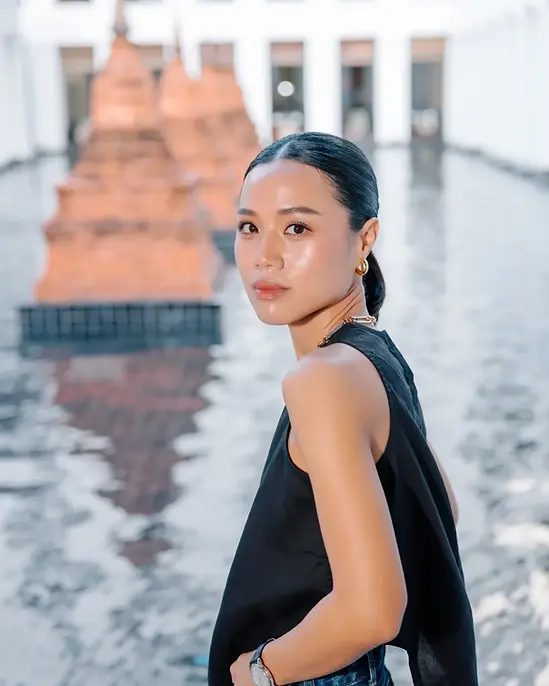
Thammika Songkaeo
Bora Chung
Last year, I was genuinely gutted to miss the session with Silvia Park, so seeing Bora Chung in this year’s Auckland Writers Festival programme immediately felt like redemption. Known for her sharp command of fiction, horror, folktales and social critique, Chung is one of those writers whose work seems impossible to place neatly into a single category, which is exactly what makes her so compelling.
As a Korean myself, I find myself naturally drawn to her presence in the programme and proud to see that voice represented on a New Zealand stage. There is something meaningful about watching writers from your own cultural background enter conversations that feel globally literary while still carrying distinctly local textures of where they come from.
In this session, Paula Morris meets Chung in her New Zealand debut to discuss the way her work moves across genre, language and form, which feels particularly exciting given how much of her writing thrives in unexpected shifts.
Chung will also appear alongside Mieko Kawakami and Laura Borrowdale as part of Plot Twist, one of AWF’s newest additions to the programme, for what already sounds like one of the most intriguing sessions of the week: Weird Girl Lit. It feels like a very niche but exciting corner of the festival, made for readers drawn to the whimsical, the unsettling and stories that lean into the darkly speculative.

Cursed Bunny by Bora Chung.
RT Hon Dame Jacinda Ardern
Finally, one of the headline events of this year’s Auckland Writers Festival sees Jacinda Ardern in conversation with Noelle McCarthy, reflecting on her path, the lessons she has gathered along the way and what she hopes for the future. I realised I have missed hearing her voice in public life more than I expected, so this feels like one of the festival’s genuinely exciting moments.
Whatever people’s views on New Zealand politics may be, it is difficult to ignore the impact Ardern had on the country’s global identity during her time in office, particularly in the way she came to represent a different tone of leadership internationally.
She will also be discussing A Different Kind of Power, her recent memoir, where she writes candidly about her early life, her years in office and the way leadership has continued to shape her life beyond politics.

RT Hon Dame Jacinda Ardern.
Conclusion
If there is one thing this year’s programme confirms, it is that there really is something for every kind of reader. Whether you are there for the literary heavyweights, the strange little niche sessions, the emotional conversations or simply an excuse to buy another book you absolutely did not plan for, AWF feels like a very good place to spend a week in May. There are many more sessions I would love to talk about, from Philip Garnock-Jones’s session on the natural history of New Zealand flowers to conversations exploring how literature moves between East and West, but these are the sessions that rose straight to the top of my list.
There are also plenty of free sessions for curious passers-by, but I would highly recommend taking a proper look through the programme to see what might spark your interest, challenge the way you think, or introduce you to something entirely unexpected.
Reminder: if you are a parent, do not overlook the young people’s programme either. There is a huge amount on offer, with thoughtful sessions, performances and workshops designed to make reading feel genuinely exciting for younger audiences too.
Hope to see many of you there!
RELATED STORIES


GIVEAWAY

SUBSCRIBE
Subscribe to Chatty Chum's mailing list to receive the latest in beauty and lifestyle news, giveaways and the launch of our Editor's Collection boxes.